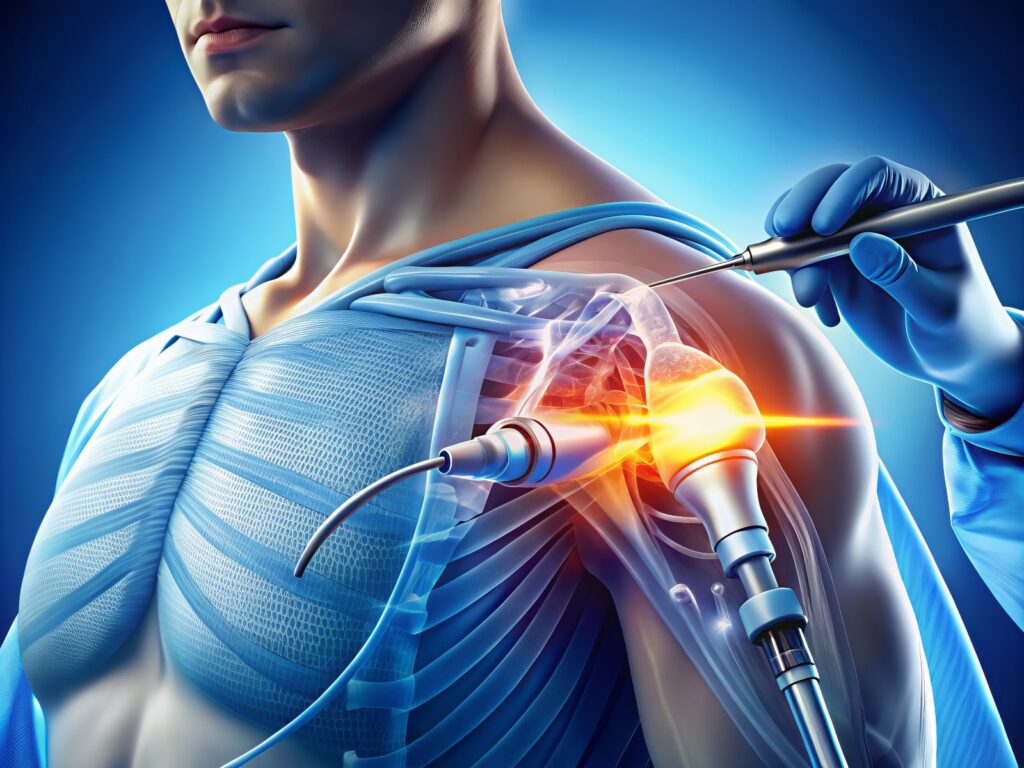
What is Shoulder Arthroscopy?
Shoulder arthroscopy is a modern keyhole surgery. Doctors use it to look inside and treat shoulder problems. Instead of making a large cut, they use small cuts and a tiny camera. This camera, called an arthroscope, helps the doctor see inside your shoulder. Because the cuts are small, healing is often quicker. Many people choose this minimally invasive shoulder surgery for faster recovery and less pain.
Common Reasons for Shoulder Arthroscopy
Doctors recommend shoulder arthroscopy for several reasons. For example, it helps fix or remove damaged tissue. Here are some common reasons:
Often, people try other treatments first. However, if pain or movement problems continue, doctors may suggest keyhole shoulder surgery.
How the Procedure Works
During shoulder arthroscopy, you will get anesthesia to keep you comfortable. Next, the surgeon makes small cuts around your shoulder. Through one cut, they insert the arthroscope. This tool sends pictures to a screen. Then, the doctor uses other small tools through the other cuts to fix the problem. Because the cuts are tiny, there is less damage to healthy tissue. Usually, the whole process takes one to two hours.
Benefits of Keyhole Surgery for Shoulder Problems
Keyhole shoulder surgery offers many benefits over traditional open surgery. For instance, you may notice:
Additionally, many people find that shoulder arthroscopy recovery is smoother. According to the American Academy of Orthopaedic Surgeons, most patients return to light activities sooner compared to open surgery.
Recovery Timeline and Tips for Faster Healing
After minimally invasive shoulder surgery, recovery times can vary. However, most people go home the same day. Here is a general timeline:
For a smooth recovery, try these shoulder surgery recovery tips:
Moreover, always ask your doctor before returning to sports or heavy work.
Risks and Possible Complications
Shoulder arthroscopy is generally safe. Still, like any surgery, it has some risks. For example, you might have:
Although these problems are uncommon, it is important to watch for signs like fever, redness, or severe pain. If you notice any of these, contact your doctor right away. The CDC and orthopedic experts agree that following aftercare instructions lowers your risk.
Prevention and Lifestyle Guidance After Surgery
After shoulder arthroscopy, you can take steps to protect your shoulder. For instance, always warm up before exercise. Use proper lifting techniques. In addition, avoid sudden, heavy movements. Here are some more tips:
Furthermore, regular check-ups with your doctor help catch problems early. If you had shoulder arthroscopy in your city, ask your local orthopedic team for ongoing support.
Conclusion
Shoulder arthroscopy is a modern, minimally invasive way to treat many shoulder problems. Because it uses small cuts, recovery is often faster and less painful. However, every person is different. Consult an orthopedic specialist at Dr. Shankarrao Chavan Memorial Medical College to learn if shoulder arthroscopy is right for you.